
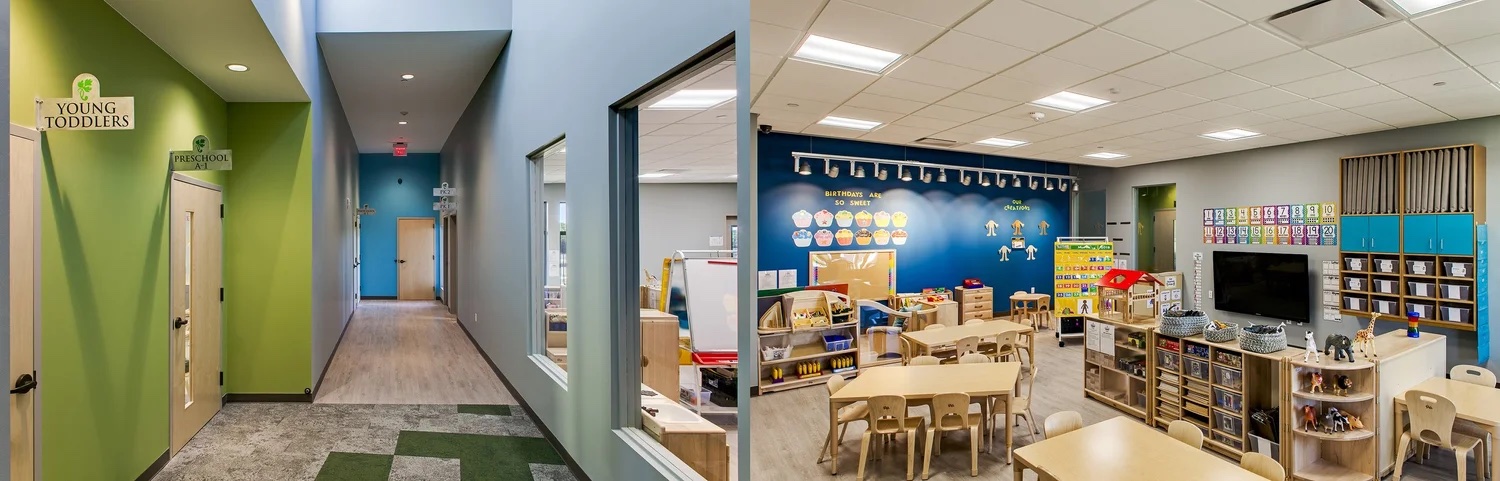
a Toddler classroom at Endeavor Montessori School
Posted on the wall in most establishments, one can see a maximum occupancy sign delegating the number of people who can be in a space at one time. The numbers on the signs are careful calculations done by architects and designers which have been verified through the local governing jurisdiction to ensure the safety of the people occupying the space. The amount of occupants that may be in a space at any given time is carefully thought out and designed depending on the use of the space and the type of building construction in order to satisfy life safety requirements. This applies to all types of buildings and spaces, not just the restaurants, bars, and venues where you most often see the signage posted. This article will briefly touch on the spatial requirements and occupancy loads in regards to early education centers in the state of Texas.
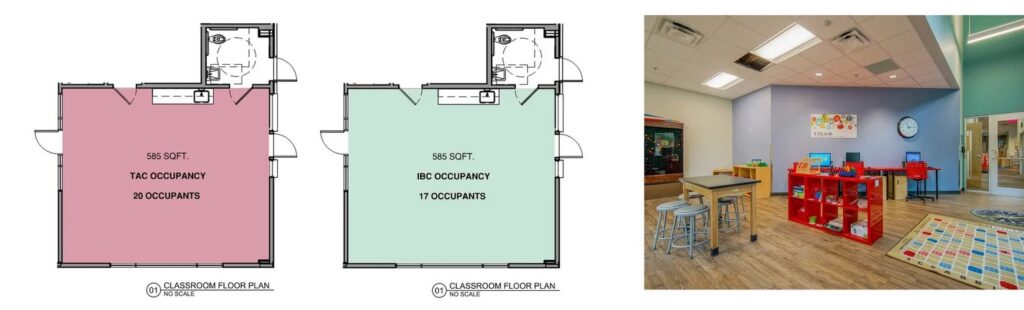
The International Building Code (IBC), which mandates the occupant loads required for permitting the construction of the building, defines the occupant load of a daycare area as one occupant per 35 net square feet. While the Texas Administrative Code (TAC), governed by the Department of Family and Protective Services which is the avenue early education facilities go through to obtain licensing, has a less restrictive occupant load of one occupant per 30 net square feet.
The example above exhibits how the same space will produce different numbers of occupants. Each number will be required in a separate step of the building process. You can see that the TAC occupancy load allows for more children compared to the IBC in the same square footage. This is where the help of a design professional can help you right size a classroom. When the occupancy load of a space is higher, it triggers the composition of the structure to have more constrictive design elements in order to ensure the safety of occupants. These elements include restrictions like ensuring that children under two and half have direct access to the outside, the size of the hallway and stairs, and proper fire suppression systems. Although this sounds like it may limit the playfulness of the space, architects and designers can utilize these restrictions to their advantage to create unique solutions.
Once the general sizing needs of the project have been determined, there are other factors to contributing to the spatial planning. The TAC places a cap on the amount of children who are watched by a single caregiver and/or two or more caregivers. For example, a group of up to four children under the age of one-year old can be watched by one teacher, while a group of up to ten children under the age of one-year old can be watched by two teachers. The number of children that may be in a group increases as the children grow older and gain more autonomy. Therefore the spatial requirements of a classroom serving infants is not the same as a classroom serving preschool children.
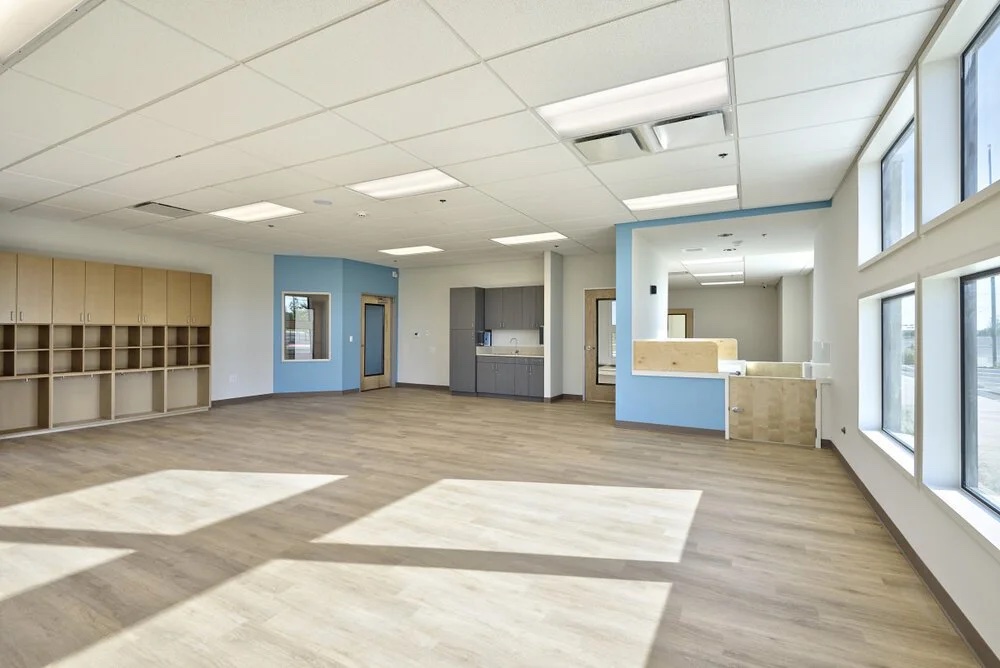
Carpe Diem Preschool interior hallway and Advanced Pre-Kinder classroom
Proper classroom design will accommodate the caregiver or facility’s goals. Not every preschool will have the capacity or desire to serve the maximum number of possible students allowed per state licensing, so therefore preschools can’t be planned with a one design fits all ideology.
Knowing the goals and restrictions of a project is important for caregivers and facilities looking to build a new childcare center. However, the occupancy load and group sizing are just the foundation of what is expected when developing a space for children. These requirements vary from state to state, but engaging with experienced design professionals will actualize help the aspirations of your project.